

Advertisement
15 Old Kitchen Gadgets From Grandma's Kitchen Nobody Uses Anymore
The TriviaTalent Team · 8 min read
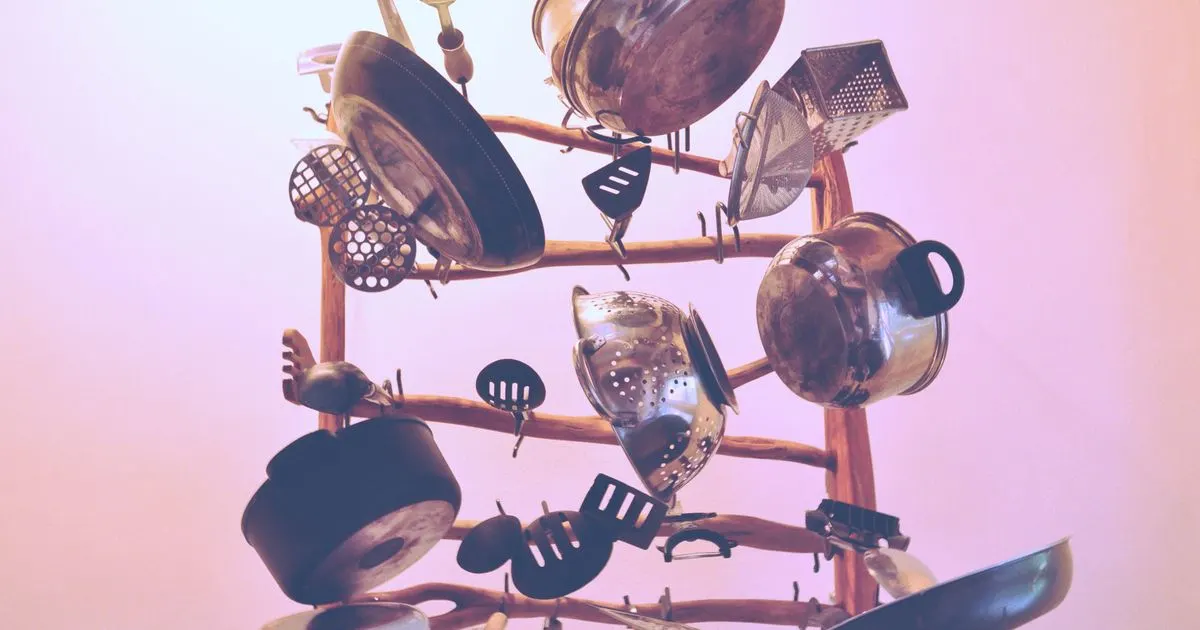
Step into your grandmother’s kitchen and the first thing you notice is the sound — the gurgle of coffee perking on the stove, the steady ratchet of a crank turning, the thump of a wooden dasher. Nothing beeped. Nothing plugged in. The counter was a landscape of metal and wood tools, each one with a single job and a handle worn smooth from use.
Most of those tools have quietly disappeared, pushed aside by a blender here and a box of pre-ground coffee there. Here are 15 you’d have found in almost any family kitchen, and why they’ve nearly vanished.
1. The Hoosier cabinet
Before kitchens came with cabinets built into the walls, the Hoosier cabinet was where the real work happened. A free-standing piece of furniture about six feet tall, it had a pull-out enamel work surface, bins and racks for sugar and spices, and — the clever part — a built-in flour bin with a sifter underneath, so you could measure and sift in one spot.
Made mostly from the late 1890s into the 1930s, they took their name from Indiana, the Hoosier State, where the Hoosier Manufacturing Company of New Castle had sold two million cabinets by 1920. Once new homes came with built-in counters and cupboards, the stand-alone cabinet had nowhere left to stand.
2. The icebox
It looked like a wooden wardrobe, but inside it was lined with tin or zinc and up top sat a heavy block of ice. Cold air sank down over the food, and the melt water trickled into a drip pan you had to remember to empty — forget, and you had a puddle by morning. The ice came from the iceman, cut from frozen lakes in winter. The whole arrangement ruled American kitchens until electric refrigerators became affordable in the 1930s and sent the icebox, and the iceman, into retirement.
3. The hand-crank egg beater
Long before a mixer did the whipping for you, there was the rotary egg beater: a handle in one hand, a crank in the other, and a set of beaters that spun fast through the gears when you turned it. Whipping cream or beating egg whites to stiff peaks meant cranking until your arm ached. One brand nearly stood in for the whole thing — the Dover egg beater, from the Dover Stamping Company, became an American classic before electric mixers took over the job.
4. The flour sifter
A tin cylinder with a mesh screen and a little crank or squeeze-trigger on the side, the flour sifter aerated flour and broke up the lumps so your cakes came out light. For generations of bakers it was as automatic a reach as the measuring cup. Today, with pre-sifted flour on the shelf and a wire strainer handy for the rare recipe that needs it, the dedicated sifter has essentially vanished from the kitchen drawer.
5. The potato ricer
Shaped like an oversized garlic press, the potato ricer forced cooked potato through a plate of small holes so it came out in soft, rice-like threads. The trick was that it mashed without overworking the starch — which is what turns potatoes gluey — so ricer potatoes were famously fluffy. It still turns up in serious cooks’ kitchens, but for most households the hand masher or the mixer took its place.
6. The food mill
Set over a pot, the food mill was a bowl with a perforated plate and a crank-turned blade that pushed soft food through the holes while leaving skins and seeds behind — how you made smooth applesauce, tomato sauce, or a jar of baby food from whatever was on the stove. Invented by Victor Simon in Brussels in 1928, it was a workhorse for decades. The food processor and the blender have mostly elbowed it aside, though cooks who want the seeds out of their tomato sauce still swear by it.
7. The butter churn
Making butter at home meant agitating cream until the fat clumped together and separated from the liquid buttermilk. Some churns were the tall, upright kind with a wooden staff you plunged up and down; others had an internal paddle you turned with a crank.
The churning usually fell to the women of the house, and it was steady, patient work. Once butter could simply be bought at the store, the family churn moved to the attic — or the antique shop.
8. The nutmeg grater
Ground spice in a jar is a modern convenience. For a long time, a cook who wanted nutmeg kept the whole seeds — the hard brown pit of the fruit of the Myristica fragrans tree — and grated what she needed fresh, on a small grater made just for the purpose.
The reward was aroma: freshly grated nutmeg over custard or eggnog smells far livelier than the dusty stuff in the tin. Convenience won anyway.
9. The stovetop percolator
Morning in a lot of homes started with the percolator on the burner: water bubbling up a central tube and raining back down over the grounds, over and over, with that unmistakable rhythmic perking sound. When the perking settled into a steady gurgle, the coffee was ready.
Percolators were everywhere until the early 1970s, when automatic drip coffeemakers arrived and took over the counter almost overnight — though a whole generation still associates the smell of morning with that perking pot.
10. The hand-crank coffee mill
Before coffee came pre-ground in a can, you ground it yourself. The hand mill was a small burr grinder — you dropped the beans in the top, turned the crank round and round, and the grounds collected below. It took real effort, and real patience, to grind enough for a pot.
Advertisement
Manual grinders go back a long way — an English blacksmith made the first in 1799. Electric grinders eventually won the kitchen on speed alone, though a few devotees still turn the crank for the ritual of it.
11. The apple parer
Come apple season, out came the parer: a cast contraption you cranked by hand that peeled an apple in one long, curling ribbon, and on many models cored and sliced it into a neat spiral at the same time. For a kitchen facing a bushel of apples bound for pies and sauce, it was a small miracle of labor saved.
It would peel a pear or a potato too, but most homes have traded it for a cheap handheld peeler, and the crank parer is now mostly a collector’s curiosity.
12. The lemon squeezer
Squeezing citrus by hand is messy and loses half the juice to your fingers, so kitchens kept a dedicated squeezer. Many old ones used a lever or a screw press, and some clamped to the counter for more muscle.
Americans were clearly serious about the problem: the U.S. Patent Office recorded more than 200 lemon-squeezer designs, most between 1880 and 1910. The oldest known squeezers of all were ceramic presses made in Kütahya, Turkey, in the early 1700s.
13. The hand-crank meat grinder
A heavy grinder with a crank was how families stretched a cut of meat or used up the leftovers of a Sunday roast. You dropped chunks into the hopper on top and turned the handle; inside, a screw drove the meat against a blade and out through a perforated plate in those familiar long strands.
The first meat grinder is credited to Karl Drais in the nineteenth century. Swap the plate and the same tool ground breadcrumbs or stuffed sausage casings — but the electric grinder and the butcher’s counter have made the hand-crank version a rare sight.
14. The gelatin mold
No mid-century buffet was complete without something shimmering and molded. Cooks set everything from fruit to shredded vegetables — and, yes, meat, in a savory jelly called aspic — into decorative molds and turned them out, wobbling, onto a platter. By the 1950s, meat aspic was a genuine dinner staple.
The craze ran deep: by the 1920s, roughly a third of the salad recipes in published cookbooks involved some kind of gelatin. Tastes changed, and the elaborate molded salad is one fashion few of us miss — though the molds still turn up at estate sales.
15. The old can opener
Opening a can used to take some doing. The earliest openers were plain blades — Ezra Warner patented a lever-and-sickle model in 1858 that the Army carried through the Civil War — and the “church key,” a pointed lever, punched a triangle in the lid. The familiar rotary opener, with a cutting wheel you drive around the rim, traces to William Lyman’s 1870 patent. Then pop-tabs arrived on cans in the mid-1960s, and a lot of that cranking and punching simply went away.
Frequently asked questions
Are any of these old gadgets actually better than the modern version?
A few have real fans. Cooks still reach for the potato ricer and the food mill because they handle texture in a way a blender can’t, and plenty of people insist freshly grated nutmeg and freshly ground coffee taste better. The rest were retired for good reason — convenience usually wins.
Why is it called a “Hoosier” cabinet?
Because so many of them were made in Indiana, nicknamed the Hoosier State. The Hoosier Manufacturing Company of New Castle, Indiana, was one of the largest makers, and its name became the general term for the whole style of cabinet.
When did iceboxes stop being used?
Mechanical, electric refrigerators began replacing them in the 1930s as they became more affordable, which also brought an end to the familiar routine of the iceman’s deliveries.
Where can I check these facts?
Every detail above is drawn from the reputable sources listed just below.
Sources
If this walk through the old kitchen stirred something, you’ll enjoy our look at things from the 1950s you don’t see anymore and the rotary phones you grew up with. Feeling nostalgic? Play our trivia quizzes and test how much of the old days you remember.
Think you remember it all? Put your memory to the test:
 Animals
?10 Questions
New World Monkey Mania: Jungle Jumps & Prehensile Puzzles!
Try QuizAdvertisement