

Advertisement
20 Things From the 1950s You Just Don't See Anymore
The TriviaTalent Team · 7 min read
Picture an ordinary afternoon in 1956. A big car with chrome and fins idles at the curb, the record changer drops a 45 onto the turntable, and down at the corner drugstore the soda jerk is pulling the handle on a cherry Coke. None of it seemed like it would ever go away.
But a whole world of everyday things has quietly slipped off since then — some retired by something better, some just left behind. Here are 20 of them you grew up with and hardly ever see now.
1. Tail fins that kept getting taller
You could tell a car's model year by how high its fins reached. They started modestly on the 1948 Cadillac and climbed every season — GM's design chief Harley Earl borrowed the look from a wartime fighter plane. The 1959 Cadillac wore soaring rockets with bullet taillights; by the mid-1960s the great fin had shrunk away.
2. The corner soda fountain
Inside the drugstore stood a marble counter lined with swiveling stools, and behind it the soda jerk mixed syrup, fizzy water, and a scoop of ice cream. Soda fountains peaked in the 1940s and '50s; once Walgreens went fully self-service in 1950, the slow fade began.
3. The automat
You walked in with a pocketful of nickels, dropped them in a slot, and lifted a little chrome-and-glass door to pull out a slice of pie. Horn & Hardart opened the first American automat in Philadelphia in 1902 and reached New York by 1912, where forty of them once ran. The very last automat closed in 1991.
4. Burma-Shave signs along the highway
Out on the two-lane roads, a row of six little signs slipped past one line at a time, building a silly rhyme that ended simply “Burma-Shave.” The shaving-cream company put up its first set in 1926. After the company was sold in 1963 the signs came down, and the roadsides fell quiet.
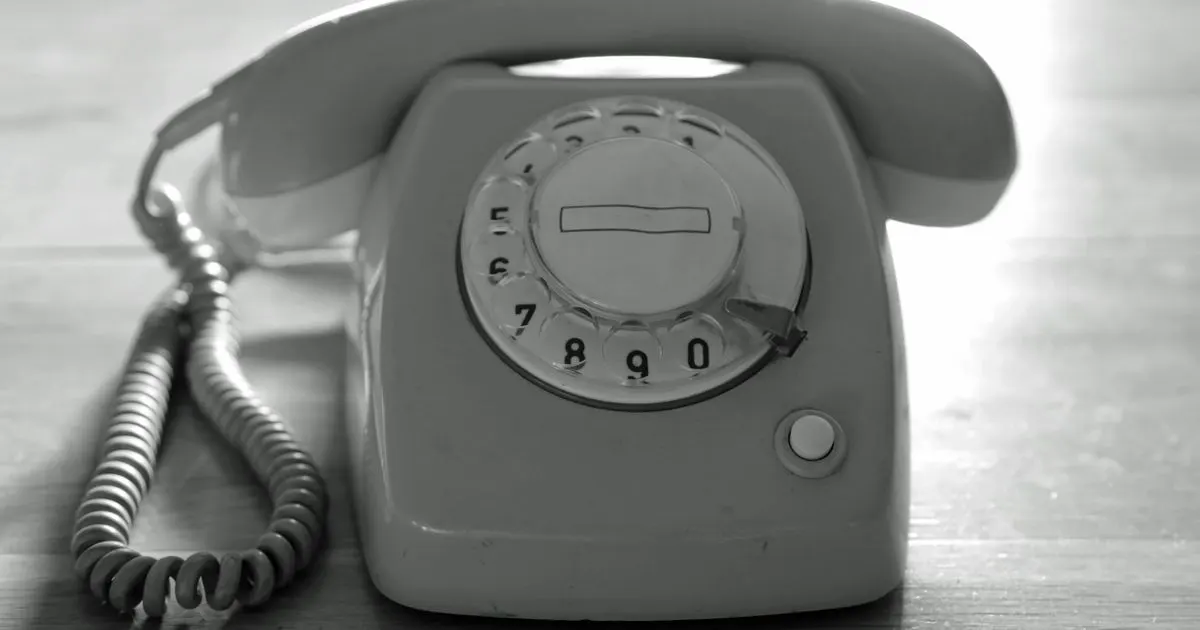
5. The telephone party line
Your phone line wasn't only yours. You shared it with neighbors down the road, each household with its own pattern of long and short rings, and you waited your turn if someone was already talking. By mid-century most telephone customers were on a party line — and if you were quiet, you could lift the receiver and hear a neighbor's whole conversation.
6. The coonskin cap
When Walt Disney's Davy Crockett, played by Fess Parker, rode across television screens in 1954 and '55, every boy on the block had to have a furry cap with a raccoon tail down the back. The craze was staggering: Americans bought more than $300 million worth of Crockett gear by the end of 1955.
7. Duck-and-cover drills
A bell would ring at school and you'd drop under your wooden desk and cover your neck, just as Bert the Turtle taught in the 1952 film; some families even dug a backyard fallout shelter. The Soviet Union had tested its first atomic bomb in 1949, and the mushroom cloud was part of the furniture of a child's mind.
8. Cigarettes a doctor “recommended”
Open any magazine and a man in a white coat smiled out, promising his brand was easy on the throat. “More Doctors Smoke Camels,” ran one famous line; another boasted that “eminent doctors” preferred its cigarettes. Leaning on physicians to sell cigarettes was ordinary advertising then — and you certainly don't see it now.
9. The church key
Before cans had tabs, the top was solid steel. You took the pointed end of a flat metal opener — everyone called it a church key — and punched two triangular holes in the lid, one to drink from and one for air. Flat-top cans had been around since 1935, and the church key lived in every drawer until the pull-tab arrived.
10. Clamp-on roller skates and the skate key
Your skates weren't boots. They were metal frames that clamped onto your street shoes, tightened with a little key you wore on a string so you'd never lose it. Lose that key and the afternoon was over — a worry no child has today.
11. A radio or TV full of glowing tubes
Switch the set on and you waited for it to warm up, because inside sat a row of glass vacuum tubes glowing softly in the dark. When one burned out — and they often did — the picture simply quit. Transistors took over from the mid-1960s, and the warm-up glow went with them.
Advertisement
12. One-shot flashbulbs
To take a picture indoors you screwed a little bulb into the camera, and it flared once in a burst of light — then it was spent, and too hot to touch. By 1965 the four-sided Flashcube let you fire four before reloading, but flashbulbs ruled family photos until electronic flash replaced them in the 1970s.
13. Car names that vanished
The road wasn't only Fords and Chevys. Your neighbor might pull up in a Nash, a Hudson, a Packard, or a Studebaker — proud independent makes with loyal followings. Nash and Hudson merged into American Motors in 1954 and both names were gone by 1957; Studebaker built its last American cars by 1964.
14. The elevator operator
Step into the elevator at the department store and a uniformed operator worked the brass lever, leveled the car just so, and called out each floor — ladies' wear, housewares, going up. Automatic elevators slowly made the job disappear, and it's now all but gone.
15. Money that whooshed through tubes
You handed your cash and sales slip to the clerk, who tucked them into a cylinder and popped it into a tube. With a whoosh it shot off to a cashier in a back room, and your change came whooshing back. Big stores laced their walls with these pneumatic tubes; a few still run, but you rarely hear that whoosh today.
16. The 45 with the big hole
The hit song came on a small seven-inch record that spun at 45 turns a minute, with a center hole far too big for the spindle. You snapped in a plastic adapter, or stacked them on a fat spindle so they dropped one after another. RCA Victor introduced the 45 in 1949, and for decades it was how you bought a single song.
17. The Fuller Brush man at the door
A knock, and there stood a salesman with a sample case full of brushes and brooms, ready to demonstrate every one on your doorstep. The Fuller Brush Company had been sending them out since 1906. Door-to-door selling faded as more women took jobs and fewer were home in the daytime to answer the knock.
18. The wringer washer
Wash day meant feeding each dripping shirt between two rubber rollers and cranking it through to wring the water out, careful to keep your fingers clear of the pinch. The automatic machine's spin cycle made the wringer unnecessary, and those two rollers over the basement tub quietly disappeared.
19. The living-room hi-fi
“High fidelity” was the thrill of the decade — a sound so clear the band might as well have set up in the parlor. Hi-fi came into its own in the 1950s; by the early '60s people had started calling it “stereo,” and the word hi-fi slipped out of everyday talk.
20. The hula hoop that swept the nation
In 1958 a company called Wham-O put a brightly colored plastic hoop on the market, and the whole country started swinging its hips — about 25 million sold in under four months, and more than 100 million within two years. Then, as fast as it came, the craze collapsed; hoops still turn up, but that summer never quite came back.
Frequently asked questions
Why did so many of these things disappear at once?
The 1950s and '60s were a rising tide of convenience — self-service stores, automatic machines, cheaper plastics, the transistor. Each one quietly retired something older, and a whole way of doing ordinary chores went with it.
Which of these do people miss the most?
Ask around and it's usually the ones with people attached: the soda jerk who knew your order, the Fuller Brush man, the operator who announced the floors. The gadgets come and go, but you remember the faces.
Where can I find more nostalgia like this?
If this stirred something up, you'll enjoy our look at 15 things from the '70s you don't see anymore, or test your memory with our 1950s trivia for seniors.
Sources
Remember these? Play our trivia quizzes and bring the old days back for an afternoon.
Advertisement