

Advertisement
15 Things You'll Only Remember If You Went to the Drive-In Movies
The TriviaTalent Team · 7 min read
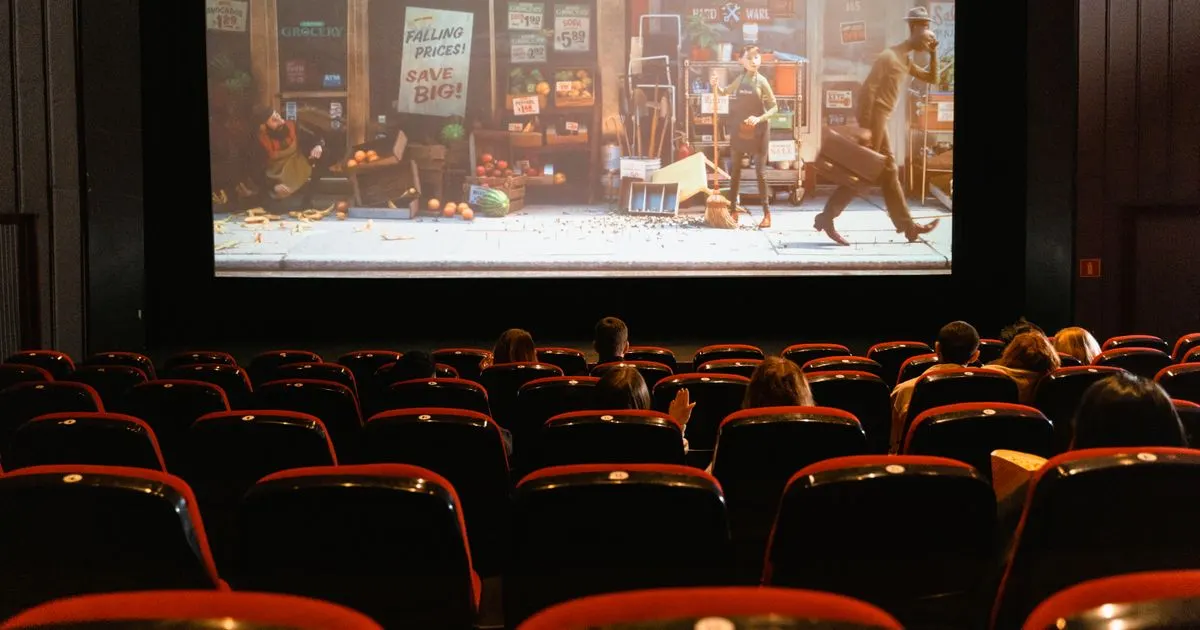
You could smell the popcorn before you’d even found a spot. The car crept over the gravel in the blue light of dusk, nosed up to a little post, and somebody rolled the window halfway down to lift off the speaker. Out past the windshield, a screen the size of a house stood waiting for the sky to go dark.
For a few decades, a summer night in America meant a movie watched from the front seat of the family car. If you were there — in your pajamas in the back, or parked in the last row with someone special — here are 15 things you’ll remember that nobody who came later ever will.
1. It all started in a New Jersey driveway
A man named Richard Hollingshead, whose family ran a chemical company in Camden, New Jersey, propped a projector on the hood of a car in his own driveway and nailed a screen to the trees to work out the spacing. He patented the idea, and on June 6, 1933, the world’s first drive-in theater opened just outside Camden. Its slogan told you exactly who it was for: “The whole family is welcome, regardless of how noisy the children are.”
2. You came early and watched the sky
There was no starting the show until nature said so. A drive-in could only begin once it was good and dark, so on a long summer evening you’d get there with plenty of daylight left, stake out your spot, and wait for that first blue dusk to fade to black. Half the fun was the waiting.
3. You paid by the carload
Admission wasn’t per person — it was per car, and that changed everything. A whole family rolled in for one price, and on a bargain “buck night” in the 1950s and ’60s the entire car got in for a single dollar. More than one teenager rode in curled up in the trunk to save the fare.
4. The screen was the size of a building
That first New Jersey screen measured 40 by 50 feet, and the ones that followed only got grander — great white walls standing alone at the edge of a field, visible from the highway. Pulling in and seeing it rise up over the rows of cars was a little jolt of excitement every single time.
5. The speaker you hung on your window
For years the sound came from a heavy metal speaker on a post between the cars. In 1941, RCA introduced the in-car speaker with its own little volume knob, and that became the ritual: roll the window down a few inches, lift the speaker off the post, and hook it over the glass. The sound was tinny and the cord was always too short, but it was yours.
6. Driving off with the speaker still attached
And sooner or later, somebody did it. The movie ended, you were tired, the kids were asleep — and you started the engine and pulled away with the speaker still hooked on the window. There was that awful little yank, and you’d jump out, sheepish, to hang the poor thing back on its pole.
7. The playground right under the screen
Down in front, in the dead space beneath that giant screen, a lot of drive-ins put a little playground — swings, a slide, a merry-go-round. Before the show, while the sky was still light, the kids tumbled out of the cars and ran wild down there, then straggled back when the first flicker hit the screen.
8. Everyone in their pajamas
Because the whole family came, and because it ran late, the back seat filled up with children already dressed for bed. Little ones in pajamas, a pillow and a blanket, a paper sack of snacks — and by the second feature, more than a few of them were fast asleep and had to be carried in at home.
9. The snack bar was the real star
The movie was the draw, but the money was in the food, and every owner knew it. The concession stand sat smack in the middle of the lot, a glowing little building you walked to across the gravel in the dark, coming back balancing popcorn, hot dogs and cold sodas for the whole car.
Advertisement
10. “Let’s all go to the lobby”
You know the one. Those dancing cartoon snacks — a hot dog, a soda, a box of candy, a tub of popcorn — singing “Let’s all go to the lobby” while a clock ticked down the minutes to showtime. The little film was made by Filmack Studios in 1957, and it’s now so woven into American moviegoing that the Library of Congress added it to the National Film Registry in 2000.
11. Two movies for the price of one
You didn’t drive all that way for a single picture. The drive-in dealt in double features, two films back to back with that intermission in between, so you got a whole evening’s entertainment out of one carload fare. By the time the second one ended, it was well past midnight.
12. The ones big enough to park a small town
Some of these places were enormous. The biggest of them all, Loew’s Open Air in Lynn, Massachusetts, could hold 5,000 cars at once — a sea of taillights and rolled-down windows all pointed at a single screen. At their peak in the late 1950s, more than 4,000 drive-ins were scattered across the country.
13. The back row and the “passion pit”
Teenagers figured out the drive-in fast, and so did their parents. The newspapers of the 1950s took to calling them “passion pits,” and the last row, farthest from the snack bar and the light, was understood by everyone to be where the couples parked. Many a first date happened behind a fogged-up windshield with a movie playing, half-watched, up ahead.
14. When the sound moved to your car radio
Eventually the clunky window speakers gave way to something better. Theaters began broadcasting the soundtrack over a low-power radio signal, and a sign at the gate told you which station to tune in. Suddenly the movie came through your own car speakers in clear stereo — no more cord, no more tin, and no more driving off with the speaker still attached.
15. The slow fade to dark
The world changed out from under the drive-in. Color television and later the VCR kept people home, the energy crisis of the 1970s pushed showtimes back an hour, and the wide-open lots grew too valuable to leave as parking for a summer night. By the late 1980s, fewer than 200 were left in the whole country. A few hundred hang on today, still flickering to life at dusk — and if you ever pull into one, that first smell of popcorn takes you right back.
Frequently asked questions
Who invented the drive-in movie theater?
Richard Hollingshead Jr. of Camden, New Jersey. He worked out the idea in his own driveway, received a U.S. patent in 1933, and opened the first drive-in just outside Camden on June 6, 1933. He sold it after a few years, but by then the idea had caught fire across the country.
When were drive-ins most popular?
Their golden age was the late 1950s and early 1960s. The number jumped from a few hundred after the war to more than 4,000 by 1958, right as the baby boom and the family car came together.
Why did the drive-ins disappear?
A pile-up of reasons. Color TV and then the VCR gave people a reason to stay home, the 1970s energy crisis shifted start times later, and above all the land itself grew too valuable — those big lots were worth far more as shopping centers than as somewhere to watch a movie from your car. For more vanished everyday things, see our list of things only rotary-phone kids remember.
Are there any drive-ins left?
Yes — a few hundred are still open across the United States, many of them family-run and still packing the lot on a warm weekend night. If this stirred up your sweet tooth, take a stroll through the vintage candy you forgot existed.
Sources
Can you still hear that speaker crackle to life? Play our trivia quizzes and take another drive back down memory lane under the stars.
Think you remember it all? Put your memory to the test:
 Geography
?10 Questions
Global Biomes Distribution Quiz
Try QuizAdvertisement