

Advertisement
15 Things From the ’70s You Don’t See Anymore
The TriviaTalent Team · 7 min read
Picture a Saturday morning in 1976. The TV warms up with a soft electric hum, the milk box sits on the porch, and somewhere down the block a car idles at a full-service pump while a man in a uniform checks the oil. None of it felt remarkable. It was just how the day worked.
Fifty years later, a lot of that world has quietly packed up and left. Here are 15 things that filled an ordinary 1970s day and have all but vanished since.
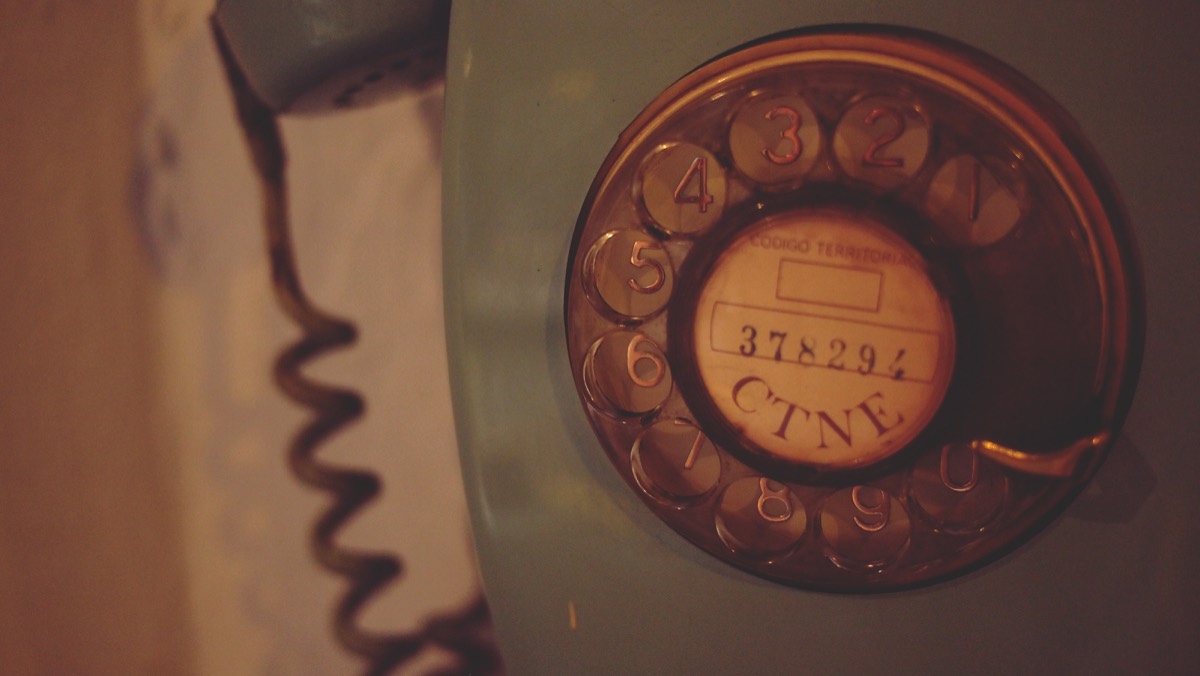
1. Rotary phones
You stuck a finger in the hole, pulled the dial all the way around, and waited for it to spin back before the next number. A long-distance call to a friend with a 9 and a 0 in it felt like a small workout.
Touch-tone service had been around since 1963, but rotary sets hung on in homes well into the '80s before push-button phones, and then cordless ones, finally retired them.
2. The TV test pattern and the midnight sign-off
Stay up late enough and the station would play the national anthem over footage of a waving flag, then cut to color bars and a steady high-pitched tone until morning. The TV didn't run all night; it went to sleep like everyone else.
That ended as stations moved to round-the-clock programming. New York stations went 24 hours around 1980, and cable and infomercials pushed everyone else there through the decade.
3. S&H Green Stamps
The checkout clerk peeled off a strip of stamps based on your grocery total, and you licked them into a booklet at the kitchen table. Enough books and you walked into a redemption center for a toaster or a lamp.
The stamps, around since 1896, lost their hold during the 1970s as supermarkets dropped them to advertise lower prices instead. By the end of the century only a handful of stores still gave them out.
4. 8-track tapes
The fat plastic cartridge went ka-chunk into the dash, and a song would sometimes fade out mid-chorus, click, and pick back up a few seconds later while the player changed programs. You didn't rewind; you just waited for it to come back around.
U.S. sales peaked in the late 1970s, then fell fast as the smaller cassette took over. Retailers phased 8-tracks out in the early 1980s.
5. Metal lunchboxes
A steel box with your favorite show stamped on the lid, a thermos rattling inside, and a dent in the corner from the day you dropped it on the blacktop. They were loud, sturdy, and built to take a beating.
Makers started switching to cheaper molded plastic in the early 1970s. Thermos is credited with producing the last metal lunchbox, a 1985 Rambo design.
6. Cigarette machines
In the corner of the diner stood a tall machine with rows of brands behind little knobs. You dropped in your coins, yanked the knob, and a pack dropped into the tray with a book of matches tucked under the cellophane.
You'd find them in nearly every restaurant, bar, and gas station through the '70s and '80s. A federal rule that took effect in 2010 banned them almost everywhere.
7. Full-service gas stations
You pulled up, stayed in your seat, and an attendant pumped the gas, wiped the windshield, and checked under the hood. "Fill 'er up" was a complete sentence.
Advertisement
The 1973 oil embargo squeezed station owners, and self-serve pumps cut the labor cost. Self-service grew quickly in the late 1970s and soon overtook full-service across most of the country.
8. Encyclopedia salesmen
A man in a suit stood on the porch with a sample volume, flipping to a glossy color plate of the solar system, promising your kids a leg up in school. A full set cost real money and filled a whole shelf.
Door-to-door sales and the big bound sets faded as the family computer and CD-ROM references arrived. Encyclopaedia Britannica stopped printing its famous set in 2012.
9. Rabbit ears and rooftop antennas
Reception was a two-person job. One of you stood holding the antenna at an angle, sometimes with foil on the tips, while the other squinted at the screen and yelled "there, right there, don't move."
Cable spread through the late '70s and '80s, and the 2009 switch to digital broadcasting finally made the fiddly analog antenna a memory for most households.
10. Drive-in theaters
You backed the station wagon into a gravel row, hung the metal speaker on the window, and the kids fell asleep in the back seat before the second feature. Admission was often by the carload.
Drive-ins peaked at more than 4,000 screens in the late 1950s. The decline sped up in the late 1970s and beyond as the land underneath them became too valuable for suburban development to pass up.
11. Phone booths
You stepped into a glass box on the corner, folded the door shut, and dropped a dime to make a call. The thick phone book dangled from a chain, its pages soft and curling.
Booths started thinning out in the early 2000s as cell phones spread, then vanished fast. New York City pulled its last freestanding public payphone from a Times Square corner in May 2022.
12. Hand-crank car windows
Rolling down the window meant exactly that: grabbing the little handle and cranking it in circles, reaching across the car to get the passenger side. Kids fought over whose turn it was.
Advertisement
Power windows had existed for decades but were a luxury option for years. They became standard equipment on most new cars only as the '80s and '90s went on.
13. Carbon paper
Slide a sheet of inky blue carbon between two pages, and whatever you typed or wrote pressed through to make an instant copy. Your fingers came away smudged, and a typo meant fixing two sheets at once.
Office copiers and, later, the personal computer and printer made it obsolete. The "cc" in your email still stands for "carbon copy."
14. Polaroid instant film
You pressed the shutter, the camera spat out a gray square, and everyone leaned in and waved it around while the picture slowly swam into focus. One shot, one print, no do-overs.
Digital cameras undid the magic. Polaroid announced in 2008 that it would stop making instant film, though a group of enthusiasts later bought the last factory and revived the process.
15. Milk delivery
Glass bottles clinked in an insulated box by the door before you were up, and the empties went back out for the milkman to collect. The cream rose to the top under a little foil cap.
Home milk delivery had already slid for decades as cars and supermarket refrigerators spread; by the late 20th century only a tiny fraction of American milk arrived on the doorstep.
Some of these faded because something genuinely better came along, and some just stopped making sense. Either way, they were the furniture of an ordinary day, the kind of thing you only notice once it's gone.
Quick quiz
Q1. What did you do with S&H Green Stamps once you'd collected enough?
Answer: Licked them into booklets and traded them at a redemption center for merchandise like toasters and lamps.
Q2. Roughly when were 8-track tapes phased out of U.S. retail stores?
Answer: The early 1980s, after peaking in the late '70s, as cassettes took over.
Q3. In what year did New York City remove its last freestanding public payphone?
Answer: 2022 — pulled from a Times Square corner that May.
Frequently asked questions
Why did metal lunchboxes disappear?
Manufacturers began switching to cheaper molded plastic in the early 1970s to cut costs. A popular story blames worried parents who feared kids would swing the boxes as weapons, but there's little hard evidence that drove the change — economics did. Thermos made what's believed to be the last metal lunchbox, a Rambo design, in 1985.
What happened to full-service gas stations?
The 1973 oil crisis pushed station owners to cut costs, and letting drivers pump their own gas eliminated the attendant's wage. Self-service went from a small share of the market to the majority within just a few years in the late 1970s. A couple of states still require full service, but almost everywhere else it's gone.
What other everyday things from that era have faded?
Plenty — TV antennas you adjusted by hand, carbon paper, phone booths, and the neighborhood video store, where Friday nights at the video store meant wandering the aisles hoping the new release was still in stock.
Sources
Remember the '70s? Play our nostalgia trivia quizzes.
Think you remember it all? Put your memory to the test:
 Science
?10 Questions
Biomolecules: The Building Blocks of Life
Try QuizAdvertisement