

Advertisement
15 Summer Jobs Every Teenager Had in the '60s and '70s That Don't Exist Anymore
The TriviaTalent Team · 7 min read
School let out, and by the next morning you had somewhere to be. Maybe it was the bowling alley, maybe the drugstore counter, maybe a street corner at dawn with a canvas bag of newspapers slung across your chest. The money was small and the hours were long, but it was the first time a boss who wasn’t your mother told you what to do.
A lot of those first jobs have simply vanished — retired by a machine, a self-service sign, or a telephone that dialed itself. You might have worked one of these. Your brother or the kid next door surely worked another. Here are 15 summer jobs from the ’60s and ’70s that have all but disappeared.
1. Pin boy at the bowling alley
Down at the end of the lane, in the heat and the racket, a boy crouched above the pit and snatched the pins back into place by hand, then rolled your ball back up the return. It was hot, loud, and a little dangerous. The automatic pinsetter changed everything — Gottfried Schmidt patented one in 1940, and AMF began marketing its machines in 1952 — so by the time you were a teenager, a pin boy was already a rare sight.
2. Soda jerk
Behind the marble counter at the drugstore, you pulled the big lever on the fountain, mixed syrup with fizzy water, and built a cherry Coke or a float in a tall glass. The name came straight from that back-and-forth “jerk” of the handle. Soda jerks were common from the 1920s into the late 1950s; then the drive-ins and walk-up burger stands took over, and the grill cook quietly replaced the jerk.
3. Movie theater usher
In a sharp little uniform, you tore tickets at the door and walked people down the dark aisle, your flashlight throwing a small circle on the carpet until you found two empty seats mid-row. You settled squabbles over saved spots and shushed the back row. The job faded as theaters left patrons to find their own way in.
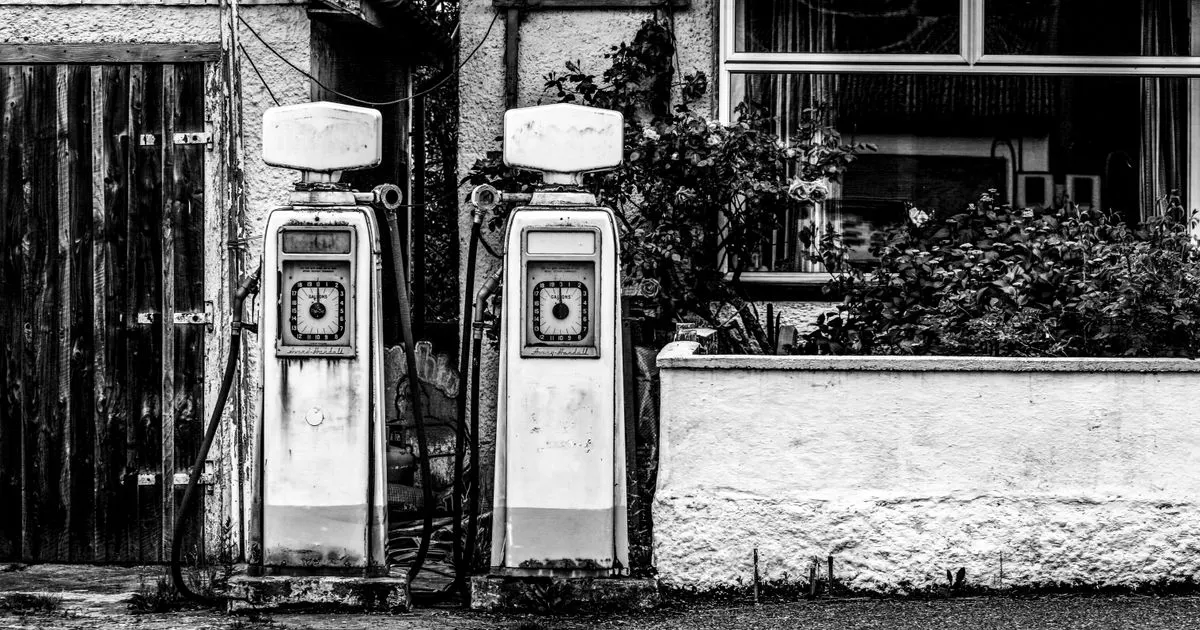
4. Full-service gas station attendant
A car rolled over the bell hose and you trotted out to pump the gas, wipe the windshield, and check the oil, all without the driver leaving the seat. Before 1970, full service was simply how America bought gasoline. Then self-service pumps spread — the first had opened in Los Angeles back in 1947 — and the attendant all but disappeared, hanging on longest in New Jersey, which banned self-service in 1949 and never looked back.
5. Carhop
You carried trays of burgers and shakes out to cars lined up at the drive-in, hooking the tray on a rolled-down window — and if the place was lively, you did it on roller skates. Carhops went back to a Dallas drive-in in 1921, and you still see them in the movies, from American Graffiti to Happy Days. But drive-through windows arrived in the mid-1960s, and the job mostly rolled away with them. (Sonic is the stubborn holdout.)
6. Elevator operator
In the department store downtown, you sat on a little stool and worked a brass lever, easing the car to a stop level with each floor and calling them out as the doors slid open — ladies’ wear, housewares, going up. Push-button elevators made the whole job unnecessary, and one by one the operators stepped out for good.
7. Telegram messenger boy
In a cap and a company jacket, you pedaled your bicycle across town to hand-deliver a Western Union telegram — sometimes wonderful news, sometimes the worst news a family would ever get. Boys had been running those yellow envelopes since the early 1900s. As the telephone took over — telegram traffic nearly halved between 1945 and 1960 — the messenger slowly pedaled into history. Western Union sent its very last telegram in 2006.
8. Milk route helper
Before dawn you rode the running board of the milkman’s truck, hopped off at each house, and swapped full glass bottles for the empties left on the porch. In 1954 more than half of America’s milk came to the door this way; by 1963 it was down to about a third, and by 1975 it had fallen below seven percent. The home refrigerator and the supermarket did the milkman in.
9. Paperboy
You folded the afternoon edition, loaded the bag, and rode your route in every kind of weather, sailing each paper onto a porch. The hard part came at the end of the month, when you knocked door to door to collect what each family owed. Afternoon papers faded, child-labor rules tightened, and grown-ups in cars took over the routes — and the boy on the bicycle became a memory.
Advertisement
10. Telephone switchboard operator
You sat at a tall board strung with cords and asked, “Number, please,” then pushed a plug into a jack to connect two strangers by hand. It was a job mostly given to young women, and a busy board took quick fingers and a steady voice. Direct dialing made the human operator unnecessary — so completely that America’s last hand-crank exchange, in Bryant Pond, Maine, didn’t close until 1983.
11. Movie projectionist
Up in the booth you threaded the film, rode the carbon-arc lamp, and watched for the little dot in the corner that told you to switch to the second projector before the reel ran out — a miss and the screen went dark in front of a full house. It took real skill and nerve. Platters and then digital projection, which swept the theaters around 2006 to 2008, turned that craft into the push of a button.
12. Corn detasseler
If you grew up in the Corn Belt, July meant walking the rows at first light, reaching up to pull the tassel off the top of each plant so the seed companies could cross their hybrids. It was hot, wet, itchy work for two to four weeks — and for generations of Midwestern teenagers it was a genuine rite of passage, often the very first paycheck they ever earned.
13. Record store clerk
You stood among the bins flipping through jackets, dropping a needle on the turntable so a customer could hear a single before they bought it, and you always knew what was climbing the charts. The record shop was where a kid wanted to work. Most are gone now; even the mighty Tower Records, which opened in Sacramento in 1960, closed its last American store just before Christmas in 2006.
14. Good Humor man
In a crisp white uniform, you drove the white truck with the jingling bells slowly down the block while every child in earshot came running with a nickel. Good Humor was a fixture of American summers — up to 2,000 of those trucks were on the streets by the mid-1950s. The company sold off its whole fleet in 1978 and moved its business into the grocery freezer aisle, and the neighborhood ice-cream man was never quite the same.
15. Working the drive-in
On a summer night you took quarters at the ticket booth or scooped popcorn in the snack bar while the family cars rolled in and hooked the little metal speakers onto their windows. At its height, around 1958, the country had more than four thousand drive-in theaters. Television and the living-room couch pulled the crowds away, and by the late 1980s fewer than two hundred were left — taking a whole summer’s worth of teenage jobs with them.
Frequently asked questions
Why did so many of these jobs disappear at once?
Almost all of them were retired by a machine or a sign. The automatic pinsetter, the push-button elevator, direct-dial telephones, the self-service gas pump, the home refrigerator — each one quietly did away with a job a young person used to hold, and the whole world of first jobs changed in a generation.
Did teenagers really work all of these?
Many were classic teenage work — the pin boy, the paperboy, the soda jerk, the usher, the messenger on his bicycle, the detasseler out in the July corn. A few, like the switchboard operator or the milkman, were more often grown-ups’ jobs that a hardworking kid could still land for the summer.
Do any of these jobs still exist?
A handful hang on. Sonic drive-ins still send out carhops, New Jersey still won’t let you pump your own gas, and a few old bowling alleys keep a human setting the pins. Mostly, though, these have slipped into memory.
Where can I find more nostalgia like this?
If this brought a few things back, you’ll enjoy our look at 20 things from the 1950s you don’t see anymore, or the mischief in things kids did in the 1960s that would be illegal today.
Sources
Remember punching that first time card? Play our trivia quizzes and clock in for an afternoon of memories.
Think you remember it all? Put your memory to the test:
 Entertainment
?10 Questions
Iconic Pop Culture Catchphrases Quiz
Try QuizAdvertisement