

Advertisement
70 Folk Music Trivia Questions and Answers: The '60s Folk Revival
The TriviaTalent Team · 10 min read
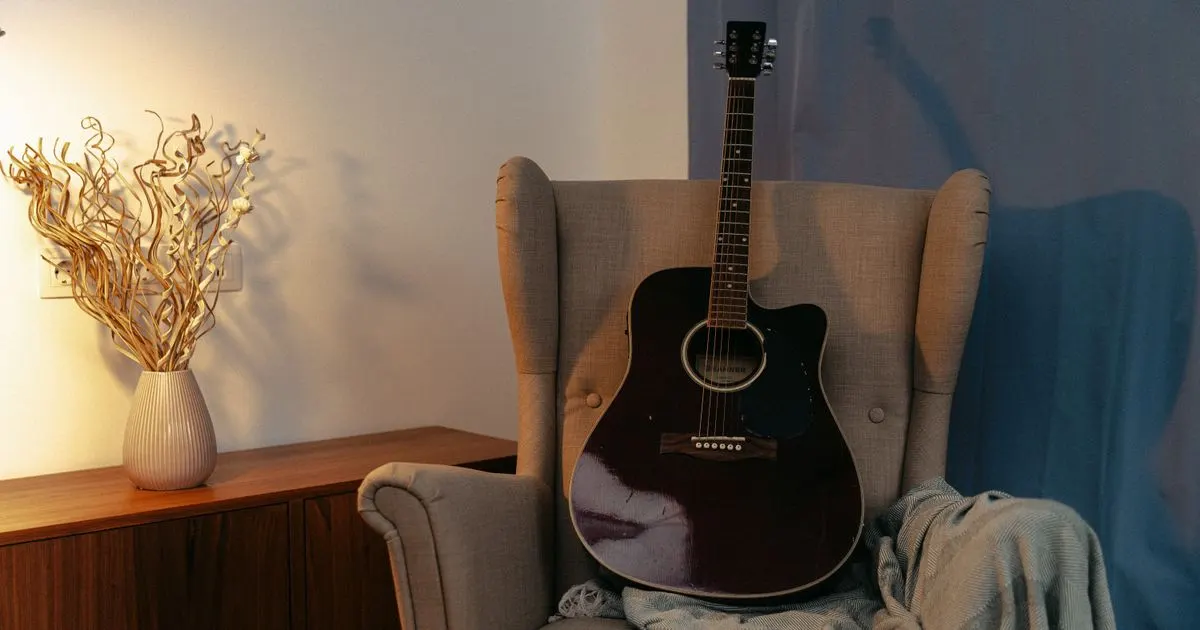
Picture a low-ceilinged coffeehouse somewhere off Washington Square — the smell of strong coffee, a circle of folding chairs, and a young man on a stool with an acoustic guitar and a harmonica rack around his neck. No drums, no amplifiers, just a voice and the truth as he saw it. For a few years in the late 1950s and early ’60s, that was the sound of America finding itself again.
The folk revival gave us Dylan and Baez, the gentle harmonies of Peter, Paul and Mary, and the old songs Pete Seeger and Woody Guthrie had carried through hard times. Here are 70 questions about that remarkable era, with every answer right below. Read them alone, or gather a few friends and see whose memory of those coffeehouse days still rings true.
How the Folk Revival Began
1. Which clean-cut trio’s 1958 number one, a murder ballad, is often credited with setting off the folk boom?
The Kingston Trio, with “Tom Dooley.”
2. “Tom Dooley” is based on the real case of a North Carolina man hanged in 1868 for murder. What was his name?
Tom Dula — pronounced “Dooley” in the local accent.
3. Name the three original members of the Kingston Trio, who formed in the San Francisco Bay Area in 1957.
Dave Guard, Bob Shane and Nick Reynolds.
4. Which quartet spent thirteen weeks at number one in 1950 with “Goodnight, Irene,” years before the revival peaked?
The Weavers.
5. “Goodnight, Irene” came from the repertoire of which legendary folk and blues singer, Huddie Ledbetter?
Lead Belly.
6. Blacklisted and kept off radio and television during the Red Scare, The Weavers staged a triumphant comeback concert in 1955 at which New York hall?
Carnegie Hall.
7. America’s most famous folk festival began in 1959 in which Rhode Island seaside town?
Newport.
8. Who, already the founder of the Newport Jazz Festival, helped launch its folk counterpart?
George Wein.
9. Which New York City neighborhood, home to clubs like Gerde’s Folk City and Café Wha?, was the beating heart of the revival?
Greenwich Village.
10. ABC’s 1963 folk variety show, which refused to book Pete Seeger over his politics, was called what?
“Hootenanny.”
The Voice of a Generation: Bob Dylan
11. Under what name was Bob Dylan born in Duluth, Minnesota, in 1941?
Robert Allen Zimmerman.
12. What major literary honor did Dylan receive in 2016?
The Nobel Prize in Literature.
13. Which song on his 1963 album The Freewheelin’ Bob Dylan asks how many roads a man must walk down and became an anthem of the age?
“Blowin’ in the Wind.”
14. The cover of The Freewheelin’ Bob Dylan shows him walking a snowy Greenwich Village street arm in arm with whom?
His girlfriend at the time, Suze Rotolo.
15. Which sweeping song from that album is often linked to the dread of the Cuban Missile Crisis?
“A Hard Rain’s a-Gonna Fall.”
16. What 1964 Dylan song and album warned parents that their sons and daughters were beyond their command?
“The Times They Are a-Changin’.”
Advertisement
17. At the 1965 Newport Folk Festival, Dylan stunned much of the folk crowd by doing what?
Playing with a loud electric band instead of solo acoustic.
18. His electric Newport backing came largely from which Chicago blues band?
The Paul Butterfield Blues Band.
19. As a young man Dylan visited his ailing hero in the hospital and wrote a tribute to him. What was the song called?
“Song to Woody,” for Woody Guthrie.
20. Which bitter anti-war song on Freewheelin’ addresses those who build the big guns and the warplanes?
“Masters of War.”
Peter, Paul and Mary
21. Name the three members of the trio whose initials gave the group its name.
Peter Yarrow, Paul (Noel Paul) Stookey and Mary Travers.
22. Which manager assembled the group in Greenwich Village in 1961?
Albert Grossman.
23. Their beloved 1963 hit about a dragon who lived by the sea is called what?
“Puff, the Magic Dragon.”
24. “Puff” grew out of a poem written by a nineteen-year-old Cornell student. Name him.
Leonard Lipton.
25. The trio carried which Dylan song to number two in 1963, introducing it to millions?
“Blowin’ in the Wind.”
26. They reached the Top 10 in 1962 with a Pete Seeger song about which simple tool?
A hammer — “If I Had a Hammer.”
27. Their only number one, in 1969, was a tearful early-morning airport goodbye. Name it.
“Leaving on a Jet Plane.”
28. Who wrote “Leaving on a Jet Plane” before becoming a star in his own right?
John Denver.
29. Their 1962 debut album included a mournful traveling song about being how many miles from home?
Five hundred — “500 Miles.”
30. “Leaving on a Jet Plane” holds a bittersweet place in their story — besides being their only number one, what else was it?
Their final hit before the group went its separate ways.
Advertisement
Pete Seeger, Woody Guthrie and the Songs of Conscience
31. What message did Pete Seeger paint around the head of his banjo?
“This Machine Surrounds Hate and Forces It to Surrender.”
32. Woody Guthrie famously scrawled what four-word slogan on his guitar?
“This machine kills fascists.”
33. Guthrie wrote this song partly in answer to Irving Berlin’s “God Bless America.” Name it.
“This Land Is Your Land.”
34. Guthrie’s final years were shadowed by which inherited illness?
Huntington’s disease.
35. Woody’s son recorded an eighteen-minute talking blues about a Thanksgiving arrest and the draft board. What is it called?
“Alice’s Restaurant,” by Arlo Guthrie.
36. Seeger was convicted of contempt of Congress after refusing to answer questions from which committee?
The House Un-American Activities Committee (HUAC).
37. Seeger co-wrote “If I Had a Hammer” back in 1949 with which fellow Weaver?
Lee Hays.
38. Which circular Seeger song asks what has become of the flowers, the young girls, the young men and the soldiers?
“Where Have All the Flowers Gone?”
39. Seeger drew almost all the words of “Turn! Turn! Turn!” from which book of the Bible?
Ecclesiastes.
40. Seeger’s only charting single poked fun at look-alike suburban houses made of “ticky-tacky.” Name it.
“Little Boxes” — written by Malvina Reynolds.
The Women Who Defined Folk
41. Which barefoot soprano became the reigning queen of the Newport festival and an early champion of the young Bob Dylan?
Joan Baez.
42. Baez’s 1975 song “Diamonds & Rust,” a look back at an old romance, is widely understood to be about whom?
Bob Dylan.
43. Baez led the vast crowd at the 1963 March on Washington in which anthem?
“We Shall Overcome.”
Advertisement
44. Baez’s biggest American hit, in 1971, was a ballad of the fallen Confederacy written by Robbie Robertson of The Band. Name it.
“The Night They Drove Old Dixie Down.”
45. Judy Collins won a Grammy for her recording of a Joni Mitchell song about seeing clouds, love and life from two sides. What is it?
“Both Sides, Now.”
46. Collins scored a surprise hit in 1970 with an unaccompanied recording of which centuries-old hymn?
“Amazing Grace.”
47. Which singer of towering voice did Martin Luther King Jr. call “the Queen of American Folk Music”?
Odetta.
48. Dylan said the first thing that ever turned him on to folk singing was hearing whom?
Odetta.
49. Which singer-songwriter wrote the anti-war song “Universal Soldier,” later a hit for Donovan?
Buffy Sainte-Marie.
50. “We Shall Overcome” grew from an old gospel hymn; Pete Seeger is credited with changing one key word from “will” to what?
“Shall.”
Folk Goes Electric
51. Which band turned Dylan’s “Mr. Tambourine Man” into the first folk-rock number one in 1965?
The Byrds.
52. The Byrds reached number one again in late 1965 with which Pete Seeger song?
“Turn! Turn! Turn!”
53. Which duo’s quiet acoustic song was later overdubbed with electric instruments and shot to number one in early 1966?
Simon & Garfunkel, with “The Sound of Silence.”
54. Simon & Garfunkel’s version of which old English ballad was featured in the 1968 film The Graduate?
“Scarborough Fair/Canticle.”
55. Which 1969 Simon & Garfunkel song follows a poor boy to the city and closes with a fighter who still remains?
“The Boxer.”
56. Which folk-rock group longed for warmer weather on a winter’s day in their 1965 hit “California Dreamin’”?
The Mamas and the Papas.
57. “California Dreamin’” was written by John Phillips and his wife. What was her first name?
Michelle.
Advertisement
58. Which young Scottish singer, often called Britain’s answer to Dylan, broke through in 1965 with “Catch the Wind”?
Donovan.
59. Which Canadian songwriter handed Peter, Paul and Mary “Early Mornin’ Rain” and “For Lovin’ Me”?
Gordon Lightfoot.
60. A group called The Highwaymen reached number one in 1961 with which old spiritual about rowing a boat ashore?
“Michael (Row the Boat Ashore).”
Songs, Singers and Singalongs
61. Which singer made the calypso call “Day-o, daaay-o” famous on his 1956 album Calypso?
Harry Belafonte, with “Day-O (The Banana Boat Song).”
62. Which group topped the chart in 1963 with “Walk Right In,” reviving a jug-band tune from 1929?
The Rooftop Singers.
63. Which clean-cut collegiate quartet had a 1960 hit with the wistful “Greenfields”?
The Brothers Four.
64. Which large folk chorus, with Barry McGuire out front, sang “Green, Green” in 1963?
The New Christy Minstrels.
65. The Kingston Trio’s comic 1959 hit “M.T.A.” follows poor Charlie, forever trapped on the subway of which city?
Boston.
66. Which protest singer, who called himself a “singing journalist,” wrote “I Ain’t Marching Anymore”?
Phil Ochs.
67. Joan Baez had a 1965 hit with which compassionate Phil Ochs song about a prisoner and a drunk?
“There but for Fortune.”
68. Which singer had a lively 1963 hit with “If I Had a Hammer,” reaching number three on the chart?
Trini Lopez.
69. Whose 1963 recording of “500 Miles Away from Home” became the most successful version, reaching the Top 10?
Bobby Bare.
70. The folk boom cooled in the mid-1960s largely because of the arrival of what, which swept young listeners toward a new sound?
The British Invasion — the Beatles and the wave of British rock groups that followed.
Frequently asked questions
What exactly was the “folk revival”?
It was the surge of interest in traditional and topical acoustic music that ran from the late 1950s through the mid-1960s. Old ballads, work songs and spirituals were dusted off and sung anew in coffeehouses and on college campuses, and a generation of young writers — Dylan chief among them — began setting the questions of the day to a guitar and a plain, honest voice.
Why did so many folk singers get caught up in politics?
Folk music had long been the music of ordinary working people, so it came naturally to singers who cared about civil rights, labor and peace. Some, like Pete Seeger and The Weavers, paid a real price for it during the blacklist years, barred from the airwaves for their beliefs.
What happened when Dylan “went electric”?
At Newport in 1965 he traded his acoustic guitar for an electric band, and part of the crowd felt he had abandoned folk’s purity. In truth he helped open the door to folk rock, and groups like The Byrds and Simon & Garfunkel walked right through it. For more of that era, try our ’60s one-hit wonders trivia.
Where can I check these facts?
Every name, song and date above is drawn from the reputable sources listed just below.
Sources
- American folk music revival — Wikipedia
- “Blowin’ in the Wind” — Wikipedia
- Newport Folk Festival — Wikipedia
Still got the old songs in your head? Play our trivia quizzes and see how many you can carry in one sitting. If you’d like to keep the music going, try our 1970s music trivia questions and answers.
Advertisement