

Advertisement
50 Big Band and Swing Era Trivia Questions and Answers
The TriviaTalent Team · 6 min read
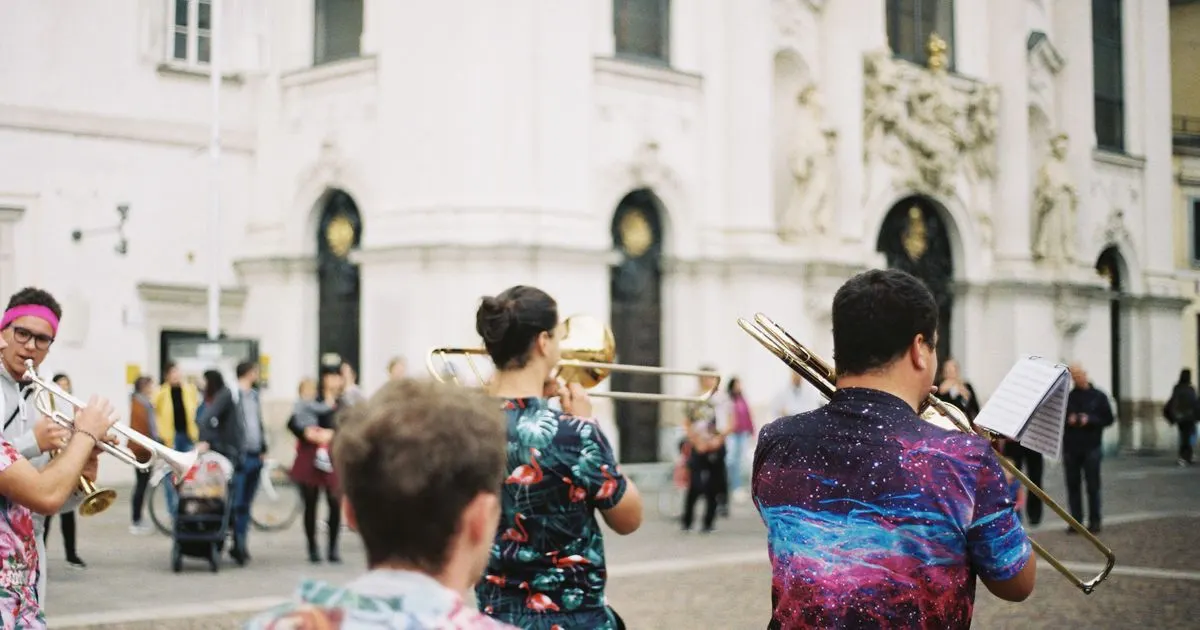
Picture a Saturday night in 1939. The ballroom floor is packed, a mirror ball throws light across a thousand faces, and up on the bandstand a dozen men in matching jackets lean into a brass-and-reed roar that makes it almost impossible to stand still. Someone grabs your hand, and before you know it you’re out among the dancers, swinging.
For about a decade, swing was simply the sound of America — on the radio, in the dance halls, and later in letters home from the war. These 50 questions travel from Benny Goodman’s clarinet to Glenn Miller’s vanished airplane, with the answer tucked right under each question so you can play along or read them aloud.
When the Whole Country Danced
1. The swing era is usually said to have begun in 1935. Until about what year did it reign?
About 1946.
2. One band’s night at the Palomar Ballroom, on August 21, 1935, is often called the night the swing era began. In which city was the Palomar?
Los Angeles.
3. A big band traded phrases between two horn sections, backed by a rhythm section. Can you name the two horn sections?
The reed (woodwind) section and the brass section.
4. The bouncy, high-energy partner dance that swept the nation had a lively nickname. What was it?
The jitterbug.
5. Swing dancing grew out of a style born in the late 1920s. What was that original dance called?
The Lindy Hop.
6. Before television, how did most families first hear these bands play live from faraway ballrooms?
On the radio.
7. Benny Goodman’s orchestra got its first national break on a radio program. What was it called?
“Let’s Dance.”
8. Besides horns and rhythm, a big band sometimes carried one or two extra sections. Name one.
A string section or a group of singers.
Benny Goodman, the King of Swing
9. Benny Goodman earned a royal nickname around 1936. What was it?
“The King of Swing.”
10. Which instrument did Goodman play?
The clarinet.
11. In which city was Goodman born, in 1909?
Chicago.
12. On January 16, 1938, Goodman’s band gave a concert one critic called the most important in jazz history. In which New York hall?
Carnegie Hall.
13. Goodman helped break down racial barriers by putting Black and white musicians on one stage. Which pianist joined his trio?
Teddy Wilson.
14. Which vibraphone player joined to turn the group into a quartet?
Lionel Hampton.
Advertisement
15. Which hard-hitting drummer powered Goodman’s band and its showpiece “Sing, Sing, Sing”?
Gene Krupa.
16. In 1939 Goodman hired a pioneering electric guitarist. Who was he?
Charlie Christian.
Glenn Miller and That Unmistakable Sound
17. Which brass instrument did Glenn Miller play?
The trombone.
18. In which Iowa town was Miller born, in 1904?
Clarinda.
19. Miller’s dreamy theme song shares its name with the moon. What is it called?
“Moonlight Serenade.”
20. Which bouncing Miller instrumental became one of the most recognized records of the whole era?
“In the Mood.”
21. Miller had a train-themed hit that became the first record ever certified gold. Name it.
“Chattanooga Choo Choo.”
22. Miller turned a telephone number into a hit song. What was its title?
“Pennsylvania 6-5000.”
23. Which shimmering Miller instrumental is named after a necklace?
“A String of Pearls.”
24. In 1942 Miller left civilian life to lead a band for which branch of the military?
The U.S. Army Air Forces.
25. Miller vanished on December 15, 1944, on a wartime flight over which body of water?
The English Channel.
Count Basie and Duke Ellington
26. “Count” was a nickname. What was Basie’s real first name?
William.
27. Which instrument did Basie play?
The piano.
Advertisement
28. Basie’s orchestra became famous for the hard-swinging sound of which city?
Kansas City.
29. Basie’s signature tune got its name from the late hour it was first played at the Reno Club. What is it called?
“One O’Clock Jump.”
30. Basie’s tenor saxophonist, nicknamed “Prez,” was one of the great soloists of the age. Who was he?
Lester Young.
31. “Duke” was a nickname too. What was Ellington’s real first name?
Edward.
32. In which city was Ellington born, in 1899?
Washington, D.C.
33. Ellington’s band became nationally famous during a long engagement at a Harlem nightspot. Which club?
The Cotton Club.
34. Ellington’s theme song, written by Billy Strayhorn, tells you how to ride the subway up to Harlem. Name it.
“Take the ‘A’ Train.”
35. Which 1932 Ellington song, sung by Ivie Anderson, gave the whole era a motto in its very title?
“It Don’t Mean a Thing (If It Ain’t Got That Swing).”
The Dorseys, Artie Shaw and the Singers Out Front
36. Tommy Dorsey played the same instrument as Glenn Miller. What was it?
The trombone.
37. Tommy Dorsey’s smooth tone earned him a gentlemanly nickname. What was it?
“The Sentimental Gentleman of Swing.”
38. Tommy’s older brother was also a famous bandleader. What was his name?
Jimmy Dorsey.
39. In 1940 Tommy Dorsey hired a skinny young singer who would become the biggest star of them all. Who was he?
Frank Sinatra.
Advertisement
40. Sinatra said he learned his famous breath control by watching Dorsey do what?
Play the trombone.
41. Dorsey’s biggest hit, a 1940 ballad with the Pied Pipers, spent twelve weeks at number one. Name it.
“I’ll Never Smile Again.”
42. Before joining Dorsey, Sinatra sang with a trumpeter’s band. Which bandleader?
Harry James.
43. Artie Shaw, a great rival of Goodman’s, played which instrument?
The clarinet.
44. Shaw’s 1938 breakthrough hit was a Cole Porter song. Name it.
“Begin the Beguine.”
45. What was the fitting title of Artie Shaw’s own theme song?
“Nightmare.”
46. In 1938 Shaw hired a legendary singer, becoming one of the first white bandleaders to tour with a Black female vocalist. Who was she?
Billie Holiday.
47. Shaw’s lush 1940 recording “Frenesi” reached what chart position?
Number one.
48. The Pied Pipers featured a singer who went on to solo fame of her own. Which one?
Jo Stafford.
49. Duke Ellington’s close writing partner for nearly thirty years was also a gifted composer. Who was he?
Billy Strayhorn.
50. The jitterbug, the newsreels, the packed ballrooms — they all point to one truth about those years. For a short while, the whole country did what together?
Danced — to swing.
Frequently asked questions
When was the big band swing era?
It ran roughly from 1935 to 1946, with Benny Goodman’s August 1935 night at the Palomar Ballroom in Los Angeles often marked as the beginning. For about a decade, swing was the most popular music in America.
Who was the King of Swing?
Clarinetist and bandleader Benny Goodman, who was given the title around 1936. His January 1938 Carnegie Hall concert is still remembered as one of the most important performances in jazz history.
What happened to Glenn Miller?
While serving as a bandleader for the U.S. Army Air Forces, Miller disappeared on December 15, 1944, on a flight across the English Channel from England to France. He was 40, and the mystery has never been fully solved.
Where can I find more music trivia like this?
Keep the music playing with our Name That Tune oldies questions and answers, or step forward a decade with our Dean Martin trivia questions and answers.
Sources
How many did you get right? Play our trivia quizzes and keep the band playing on.
Think you remember it all? Put your memory to the test:
 Animals
?10 Questions
Cosmic Critters: Animals in Space Trivia!
Try QuizAdvertisement