

Advertisement
100 1950s TV Show Trivia Questions and Answers (The Golden Age of Television)
The TriviaTalent Team · 13 min read
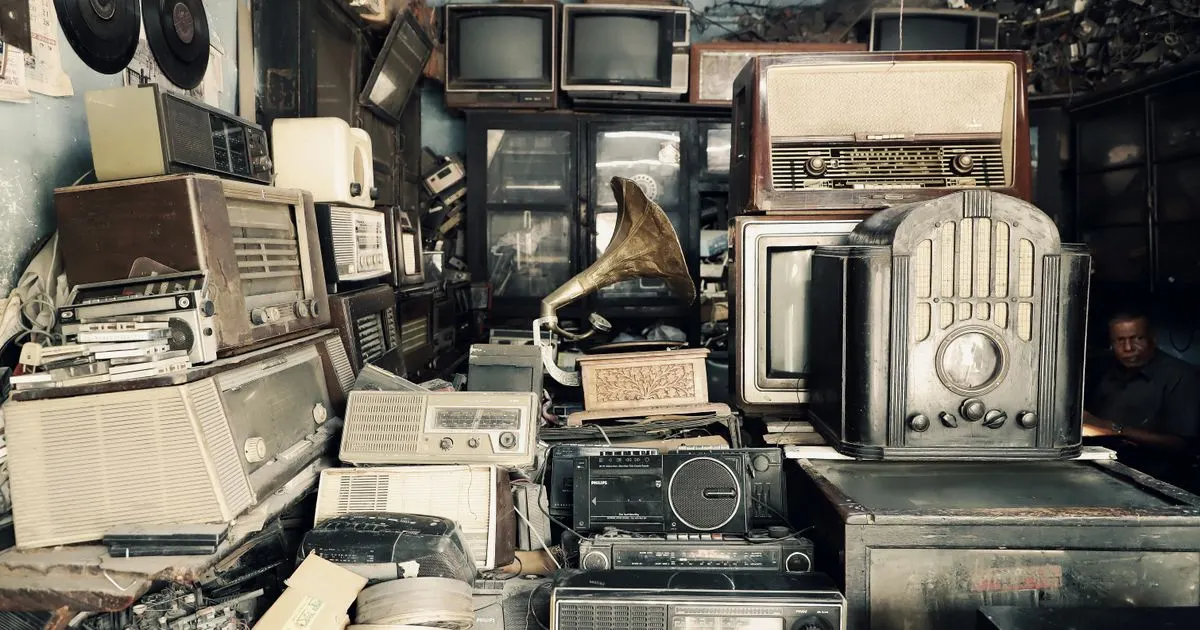
Picture the living room on a weeknight in 1956. The big wooden console in the corner takes a moment to warm up, the picture blooms out of a tiny bright dot, and the whole family settles in — because there is one set in the house, and when something good comes on, nobody wants to miss it. The glow is black and white, the sound comes through a single speaker, and tomorrow everyone at school or at the plant will be talking about what they saw.
These 100 questions take you back through that first golden decade of television: the redhead stuffing chocolates into her blouse, the bus driver hollering at the moon, the masked man on the white horse, the quiz show booth that hid a national scandal. Read them to yourself, or gather the family and see who still remembers the secret word. The answer sits right under each question, so there is no need to wait through a commercial.
Live Television and the Early Variety Shows
1. In television’s earliest days, one brash comedian in loud costumes grew so popular that his show is credited with helping sell TV sets. He hosted Texaco Star Theater — name him.
Milton Berle, who earned the nicknames “Uncle Miltie” and “Mr. Television.”
2. On what night of the week did families crowd around to watch Milton Berle?
Tuesday nights, on NBC, where the show ran from 1948.
3. Sid Caesar headlined a live, 90-minute comedy and variety program from 1950 to 1954. What was it called?
Your Show of Shows.
4. Who was Sid Caesar’s nimble comic partner, famous for their pantomime sketches together?
Imogene Coca.
5. The writers’ room of Your Show of Shows launched some of the biggest names in American comedy. Name two who wrote there.
Mel Brooks and Neil Simon, among others.
6. One Your Show of Shows cast member went on to create The Dick Van Dyke Show. Who was he?
Carl Reiner.
7. Ed Sullivan’s Sunday-night variety showcase went by a different name until 1955. What was it originally called?
Toast of the Town.
8. Ed Sullivan opened the program each week by promising the audience what?
“A really big show” — which, in his stiff delivery, always came out sounding like “a really big shew.”
9. On September 9, 1956, Sullivan’s show drew a record audience of about 60 million for the TV appearance of which young singer?
Elvis Presley.
10. A famous story says Elvis was shown only from the waist up on Sullivan’s stage. On which of his appearances did that actually happen?
His third and final one, on January 6, 1957 — not the first, as the legend often has it.
The Ricardos, the Kramdens and Life at Home
11. I Love Lucy first aired on CBS in what year?
1951.
12. What was the name of Lucy’s bandleader husband, and who played him?
Ricky Ricardo, played by Desi Arnaz.
13. Ricky led the band at a New York nightclub. What was it called?
The Tropicana.
14. Who played Lucy’s best friend and landlady, Ethel Mertz?
Vivian Vance.
15. Ethel’s thrifty, grumbling husband Fred was played by which actor?
William Frawley.
16. In the beloved episode “Job Switching,” Lucy and Ethel take jobs at a candy factory and lose a hopeless battle with what?
A speeding chocolate conveyor belt — they end up stuffing the candies into their mouths, hats and blouses to keep up.
17. In “Lucy’s Italian Movie,” Lucy climbs into a vat to do what, and winds up in a grape-throwing brawl?
Stomp grapes with her bare feet.
18. In “Lucy Does a TV Commercial,” Lucy gets loopy rehearsing a pitch for a health tonic. What was the tonic called?
Vitameatavegamin.
19. Ball and Arnaz filmed the show before a live audience with three cameras, through a company named by blending their first names. What was it called?
Desilu.
Advertisement
20. The episode in which Lucy gives birth drew a huge national audience the morning after Lucille Ball really delivered her son. In what year did it air?
1953.
21. The classic run of 39 Honeymooners episodes began in what year?
1955.
22. Jackie Gleason created the show and starred as which loud, scheming bus driver?
Ralph Kramden.
23. What fictional company employed Ralph as a driver?
The Gotham Bus Company.
24. Audrey Meadows played Ralph’s quick-witted, level-headed wife. What was her name?
Alice Kramden.
25. Art Carney played Ralph’s goofy upstairs neighbor and best pal. Name the character and his line of work.
Ed Norton, a New York City sewer worker.
26. Who played Ed’s wife, Trixie Norton?
Joyce Randolph.
27. On which Brooklyn street did the Kramdens live in their bare-bones apartment?
Chauncey Street.
28. Ralph and Ed belonged to a lodge with a comical name. What was it?
The Loyal Order of Raccoons — the “Raccoon Lodge.”
29. Ralph was forever making blustery, empty threats to Alice. Can you finish one of them?
“One of these days … Pow! Right in the kisser!” — or his cry of sending her “to the moon, Alice!”
30. What soft-hearted line did Ralph use to make up with Alice at the end of a quarrel?
“Baby, you’re the greatest.”
More Sitcom Favorites
31. Leave It to Beaver premiered in 1957. In what fictional town did the Cleaver family live?
Mayfield.
32. What was the real first name of the younger Cleaver boy, known to everyone as “Beaver,” and who played him?
Theodore, played by Jerry Mathers.
33. Who played Beaver’s calm, pipe-smoking father, Ward Cleaver?
Hugh Beaumont.
34. Barbara Billingsley played Beaver’s ever-patient mother, often remembered for doing housework in pearls. What was her character’s name?
June Cleaver.
35. Beaver’s older brother Wally had a two-faced friend — all manners around grown-ups, trouble otherwise. Name that character and the actor.
Eddie Haskell, played by Ken Osmond.
Advertisement
36. Robert Young starred as the wise, steady father on Father Knows Best. What was his character’s name?
Jim Anderson.
37. What was Jim Anderson’s profession?
He was an insurance agent.
38. In what fictional town did the Andersons live?
Springfield.
39. Jim had affectionate nicknames for his daughters. What did he call elder daughter Betty, and younger daughter Kathy?
“Princess” for Betty and “Kitten” for Kathy.
40. Who played Jim’s warm, sensible wife, Margaret Anderson?
Jane Wyatt.
41. The Adventures of Ozzie and Harriet starred a real-life family playing themselves. What was their surname?
Nelson.
42. Which Nelson son became a genuine teen rock ’n’ roll idol, with his songs worked into the show?
Ricky Nelson.
43. The show was famous for never clearly showing one ordinary thing about Ozzie’s life. What was it?
His job — Ozzie never seemed to go to work, and his character’s profession was never really spelled out.
44. The 1959 sitcom Dennis the Menace was based on a popular comic strip. Who created it?
Hank Ketcham.
45. Who was the peace-loving next-door neighbor forever pestered by Dennis, and who played him?
Mr. George Wilson, played by Joseph Kearns.
46. Phil Silvers played a fast-talking, scheming army sergeant in a show many remember as Sgt. Bilko. What was the character’s full name?
Master Sergeant Ernie Bilko (Ernest G. Bilko).
47. At what sleepy fictional army post in Kansas was Bilko stationed?
Fort Baxter, in the town of Roseville.
48. What part of the base did Bilko run, where he hatched most of his gambling schemes?
The motor pool.
Cowboys and the Wild West
49. Gunsmoke rode onto CBS in 1955. Who was the U.S. Marshal at its center, and who played him for two decades?
Marshal Matt Dillon, played by James Arness.
50. In what Kansas cattle town was Gunsmoke set?
Dodge City.
51. What was the name of the saloon run by Miss Kitty Russell, played by Amanda Blake?
The Long Branch Saloon.
52. Which movie star recommended James Arness for the role and personally introduced the very first episode?
John Wayne.
Advertisement
53. Clayton Moore starred as the masked former Texas Ranger. What did his faithful companion Tonto call him?
“Kemo Sabe.”
54. Who played Tonto?
Jay Silverheels.
55. What was the name of the Lone Ranger’s great white horse, and what did he shout to spur him on?
Silver — “Hi-Yo, Silver, away!”
56. What piece of classical music served as the show’s galloping theme?
Rossini’s William Tell Overture.
57. James Garner played a smooth-talking gambler who much preferred cards to gunfights. Name the character.
Bret Maverick.
58. Jack Kelly played Bret’s brother, who shared the lead. What was his name?
Bart Maverick.
59. Chuck Connors played a widowed rancher raising his son in North Fork, New Mexico Territory. Name the character.
Lucas McCain.
60. The Rifleman was named for McCain’s customized Winchester. What could it do, shown off in the opening credits?
It was modified so he could fire it rapidly, levering off shots in a blur.
61. Richard Boone played a gentleman gunfighter for hire, based at a San Francisco hotel. What name did he go by?
Paladin.
62. Paladin’s calling card showed a chess piece and four words. What was the piece, and the message?
A knight, with the words “Have Gun — Will Travel.”
63. Walt Disney’s Davy Crockett serial set off a nationwide craze for what piece of headwear, and who played Crockett?
Coonskin caps; Fess Parker played Davy Crockett.
64. In Disney’s Zorro, mild-mannered Don Diego de la Vega became a masked avenger who left what mark as his signature?
A “Z,” slashed with his sword. Guy Williams starred.
Cops, Lawyers and Men of Mystery
65. Jack Webb played a terse Los Angeles police detective on Dragnet. Name the character.
Sergeant Joe Friday.
66. How did each episode’s opening narration begin?
“The story you are about to see is true; the names have been changed to protect the innocent.”
67. What was Sergeant Friday’s badge number, later retired by the LAPD in Webb’s honor?
714.
68. “Just the facts, ma’am” is the line everyone ties to Friday — yet it wasn’t really his. Where did it come from?
A popular comedy parody of the show. Friday almost never actually said it on the air.
Advertisement
69. Raymond Burr starred as a defense attorney who almost never lost. Name him.
Perry Mason.
70. Mason’s cases were usually cracked in the courtroom when what happened?
The real culprit, cornered by Mason’s questions, would break down and confess on the witness stand.
71. Name Mason’s loyal secretary and his private investigator.
Della Street (Barbara Hale) and Paul Drake (William Hopper).
72. The portly director who hosted this famous anthology greeted viewers each week with which two words?
“Good evening.”
73. He opened by stepping into a simple line drawing of his own profile, set to what piece of music?
Gounod’s “Funeral March of a Marionette.”
74. What did audiences come to expect at the end of nearly every Alfred Hitchcock Presents story?
A twist ending.
Heroes, Space and the Unknown
75. Who starred as Superman and his mild-mannered alter ego in the 1950s Adventures of Superman?
George Reeves.
76. What was Superman’s reporter identity, and the newspaper he worked for?
Clark Kent, of the Daily Planet.
77. In what city did Clark Kent and the Daily Planet operate?
Metropolis.
78. Finish the show’s opening: “Faster than a speeding bullet! More powerful than a locomotive! …”
“… Able to leap tall buildings in a single bound!”
79. The narration said Superman fought a never-ending battle for three things. What were they?
“Truth, justice and the American way.”
80. Rod Serling’s eerie anthology premiered in 1959. Who created it and introduced each episode on screen?
Rod Serling himself.
81. Serling’s opening spoke of a realm beyond sight and sound. How did it begin?
“There is a fifth dimension beyond that which is known to man …”
82. In the chilling episode “To Serve Man,” the aliens’ book turns out to be what?
A cookbook.
Howdy Doody to Lassie: Children’s Television
83. Who was the cowboy-hatted host of Howdy Doody, one of television’s first children’s hits?
Buffalo Bob Smith.
84. The studio audience of children on Howdy Doody was known by what name?
The Peanut Gallery.
85. Howdy the marionette had 48 freckles, chosen to represent what?
One for each U.S. state at the time.
Advertisement
86. The young cast members of Walt Disney’s The Mickey Mouse Club were called what?
Mouseketeers.
87. What distinctive headgear did they wear?
Mouse-ear hats.
88. Which Mouseketeer became the most popular of all and a lasting star?
Annette Funicello.
89. Bob Keeshan played the gentle Captain Kangaroo, whose name came from what feature of his coat?
Its big, kangaroo-like pockets.
90. In a running gag, Mr. Moose would set off a shower of what onto the Captain’s head?
Ping-pong balls.
91. Lassie, the loyal collie, came to TV in 1954. For several seasons she looked after a farm boy played by Jon Provost. What was his name?
Timmy.
92. “Timmy fell down the well” is the line everyone quotes — but what’s the catch?
Timmy never actually fell down a well on the show. It’s a myth; Jon Provost even titled his memoir “Timmy’s in the Well” as a joke about the one place he never fell.
Quiz Shows and the Big-Money Craze
93. Which cigar-wielding comedian hosted the quiz show You Bet Your Life, trading wisecracks with the contestants?
Groucho Marx.
94. If a contestant happened to say the show’s “secret word,” what dropped down to deliver a $100 bonus?
A toy duck, made to look a bit like Groucho himself.
95. On the panel game What’s My Line?, what were the panelists trying to figure out about each guest?
His or her occupation, using only yes-or-no questions.
96. Each show featured a famous “mystery guest.” What did the panel do to keep the guessing fair?
They put on blindfolds.
97. One stock question from the panel became a national catchphrase. What did they ask to size up a mystery object?
“Is it bigger than a breadbox?”
98. The $64,000 Question, which premiered in 1955, sat its high-stakes contestants inside what, to crank up the suspense?
An isolation booth.
99. As a contestant climbed toward the top prize, how high could the winnings go?
$64,000.
100. The big-money quiz shows collapsed in 1958 amid a national scandal. What had been going on?
They were rigged — favored contestants were fed the answers in advance.
Frequently asked questions
Were all of these shows in black and white?
Nearly all of them, yes. Through most of the 1950s, television was broadcast in black and white; color sets were rare and expensive, and color programming did not become common until the 1960s. A few shows were filmed in color even then, but most families watched everything in shades of gray.
How should I use these questions with a group?
Read a section aloud and let everyone call out answers before you reveal them, or split into teams and keep score. Don’t be surprised if a single question — say, the name of Ralph Kramden’s lodge — sets off a round of stories about who in the family claimed the one good chair in front of the set.
Which of these shows ran the longest?
Gunsmoke is the champion of this group, riding on for 20 seasons from 1955 to 1975. The Adventures of Ozzie and Harriet also had a remarkable run, lasting 14 seasons into 1966.
Where can I check these facts?
Every name, date and detail above is drawn from the reputable sources listed just below.
Sources
If this stirred up memories, keep the evening going with our I Love Lucy trivia questions and answers or settle in for our classic TV trivia questions and answers. Ready for more? Play our trivia quizzes and see how many decades you can conquer.
Think you remember it all? Put your memory to the test:
 Geography
?10 Questions
Global Cash: A Currency Geography Quiz
Try QuizAdvertisement